







~ Climbing or 'Pole' FRENCH BEAN Seed ~
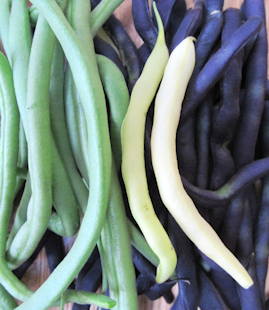
Climbing beans give you a larger yield in less space, but you do need to make a sound wigwam of poles to withstand the wind once the plants leaf out.
Climbing beans crop a little later than bush beans, but will then carry on over a much longer season, giving a higher yield overall. We sow some bush beans to start us off, then some climbers to last us right through the summer.
You can sow your beans direct in the ground, but we get better results if we start them off in trays or pots, which lets us keep them away from mice, and also means that we can give them a bit of heat.
Sowing Information

'Cherokee Trail of Tears' Pole Bean
This bean was originally from the native North American Cherokee people. In 1838 they were driven out of their homelands in the state of Georgia by the US government to make room for more European settlers , a forced march known as the 'Trail of Tears'. This bean is one of their heirlooms they managed to keep with them and has been passed on from generation to generation ever since.
We can see why the Cherokees valued it so much! It is incredibly prolific, cropping over a long season. We plant lots each year for our own use & feedback from all of you is always positive.
 approx 70 seed £
Some of them do need stringing, not predictably always the largest, but since you can tell as soon as you top & tail them, where's the problem? I've been handing them out to eat raw like sweets to my neighbours, all of whom have expressed interest in growing them next year.
Thank you for introducing me to them. Please carry on the good work." Morene Griggs

'Cosse Violette' Purple Pole Bean
A really vigorous early bean with purple flowers, stems & pods. (Note: the purple colour turns to green on cooking.)
The special thing about these is that they stay stringless even to a big size, so it doesn't matter if you miss some or go away for a few weeks in the middle of the season. Lots of people have written in to say how much they like it.
Tall, with purple pods that stay stringless even when big.
approx 70 seed £

‘Coco Sophie’ Flat Pole Bean - RARE
A tall climbing bean from the 1700s. With very flat pods, it looks like a runner, but really isn't, it's a proper french bean.We love this bean because it has an absolutely wonderful buttery texture when cooked and an excellent flavour.
After almost three hundred years, it became commercially unavailable in 2006. We brought this rare bean back, starting with a small sample from our seedbank. Not available every year, but if you like it - as we think you will - it's very easy to keep your own seed following the instructions supplied.
Beautiful white seeds, large buttery green pods.
 40 seed (rare), organic. £


‘Neckargold’ Yellow (usually) Pole Bean, Flat-podded
A delicious tender yellow climbing bean, it grows really tall , giving lots of long flat beans that start pale green and ripen to glowing yellow.
Even the plants show up the colour, with bright yellow stems. The yield is excellent, and they stay stringless even up to 8 inches long, staying tender for longer than other varieties. It is later than our other beans, definitely mid season, but this is useful to extend your bean crop after the others start to trail off.
Yellow, tasty, stringless, good yields of long beans. Beware may come out green in some conditions!
80 seed £

'Lazy Housewife' Pole Bean - UNIQUE FAT BUTTERY BEANS
A prolific bean introduced by W. Atlee Burpee and Co in 1885 - from their original description: "the pods are green, entirely stringless, of extra fine flavor, exceedingly rich and buttery when cooked."
This is a late-cropping bean, so you definitely need to grow another type as well for the start of the season. But the beans are incredible; they have these huge fat white seeds that taste fantastic - all soft and buttery - when boiled. The pods stay stringless for a long time and you get a lots of them -it's just great. This was Ben's favourite bean in 2016.
In 1907 this was judged to be almost the very best flavoured bean on the market (sadly the one single variety that beat it is now extinct so we can't offer it.)
approx 50 seed £

'Princess’ Flat-podded Pole Bean - VERY RARE
This wonderful bean was recommended to us by Camilla Plum, seed collector and celebrity gardener from Denmark. She sent a few seed from her collection and explained that it was a very old variety that is no longer in circulation, and that it was unique because the pods stay tender for ages on the plant, even when they get fat and the beans have filled out.
We tried it here in Wales and it was really good with exceptionally tasty, big flattened pods.
Seed not available every year, so again do save your own for future use if you like it.
approx 40 seed, organic. £

'Early Marvel of Venice' Yellow Pole Bean
An early-cropping yellow pole bean, from northern Italy, with round pods, slightly flattened, that are a lovely light yellow colour.
There are actually two related versions of "Marvel of Venice" - this one, with white seeds, is particularly early to crop. There is another one with black seeds that ripens later , but we think this white seeded one is better for the UK.
It grows very tall so provide decent height canes - but then you also get a lot of beans!
about 90 seed £
~ Seed-SAVING - HOW TO SAVE your own Bean Seed ~
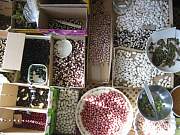
The physical seed-saving is easy, but the need for isolation (to keep the seed true to type) depends on the species:
- French Beans (this page) do cross, but not so easily, so you can grow more than one variety in different parts of your garden so long as you are careful about roguing out (getting rid of) any off types each year.
- Runner Beans DO cross very easily, so only grow one variety if you want to keep the seed.
- Broad Beans also cross A LOT and are harder to keep for seed as you need to isolate them from others with 1/2 a mile or so.
Also, be sure that you don't plant types with similar-coloured
seeds next to each other,
otherwise you'll not be sure which plant they come
from if they all grow tangled together.
More detailed seed-saving instructions are included with your seeds, so you
can do all this yourself at home.
