




DIY design for Low-cost isolation cages
for saving seed of peppers & aubergines
Estimated cost: less than £10 = €15 = $18,
or as little as £1 if old net curtains are used.
Time: approx 1 hour total.
Peppers and aubergines can self-pollinate, but are also crossed by insects.
So if you want to save seed from these vegetables, you have to exclude the insects somehow.
Otherwise you will end up with seed that is not the same as the parent plant
- 'sweet' peppers that are hot, 'white' aubergines that are purple etc.
This is a simple design we have come up with, that can be made with minimum tools and expense
Materials required
(stated dimensions make cage 0.9m x 0.9m x 0.8m, suitable to hold 4 plants)
- A length of cheap nylon flyscreen, five times as long as it is wide (5m x 1 m). Can also use old net curtains etc.
- Four thin stakes or canes (e.g. bamboo, hazel), each a bit longer than the flyscreen is wide (1.3m)
- Some string - slightly more than twice the length of the flyscreen (11m)
- Four small bits of garden wire, i.e thin galvanised or plastic-coated.
- Strong cotton thread for the sewing machine
- Four medium-sized rocks
Tools required
- Sewing machine.
- Mallet if your ground is hard
- Saw to cut stakes
- Wire cutters/pliers.
- Knife to cut string.
First make the cage:
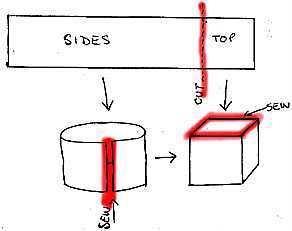
- Cut a square off the end of the strip of flyscreen. This will be the top of the cage.
- Fold the remaining strip of flyscreen round and sew its ends together. The resulting band will be the sides of the cage.
- Now sew the top to the sides. You should have a cube of flyscreen with the bottom missing:
Now make the frame:
- Hammer the four stakes into the ground, in a square a little smaller than the cage (e.g. 0.9m x 0.9m)
- Make sure they are firmly set. They need to stick up a bit less than the height of the cage (e.g 0.8m)
-
Twist one short bit of wire really tightly round the top of each stake, so it can't slip. Leave 2 cm spare at each end of the wire.
- Run string in a square round the tops of the stakes. This will support the top edges of the cage.
- Twist the spare ends of the wires over the string so it can't slip.
- Run a second piece of string around the stakes lower down - no need for wire. This is to stop the sides of the cage blowing in against the plants.
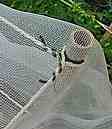
Detail of corner, showing wire wrapped round string so it can't slip down the stake.
And put it together:
That's it. Now plant your four plants inside the square, drop the flyscreen cage over the top, and weigh the edges down with rocks, making sure there are no gaps:
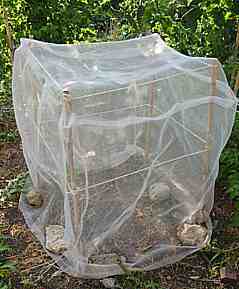
Insects can't get in but light, air and water can. (If the very occasional insect does get in, it can't get out again to cross you plants with the others. ) So seed saved from these plants will be pure, and true-to-type.
Note that peppers will self-pollinate easily inside a cage, but you may need to shake the aubergines occasionally if it isn't very windy.
The cage should last several years, and can be rolled up and stored over-winter, although you will probably need to get new stakes each year. Of course, if any of your plants show signs of disease, you should wash the cage before re-using it.
We hope you find this useful, and that it encourages you to try saving your own seed of these plants. Remember, if you do not pass on good seed, protected and true to type, then the unique qualities of that variety will be lost for ever.
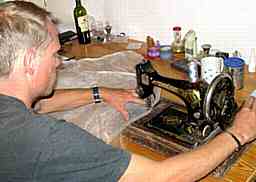
Volunteer helper Julian sewing cages for the Collection,
using our hand-cranked sewing machine,
made in 1908 & still running beautifully.
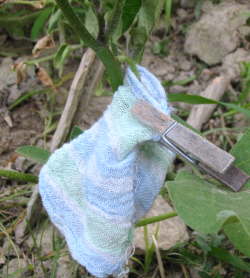
Note - As a smaller alternative, you can put a bag of fine cloth
(or made from the foot of a pair of tights) over individual flowers.